

AI Spells Death To The Process

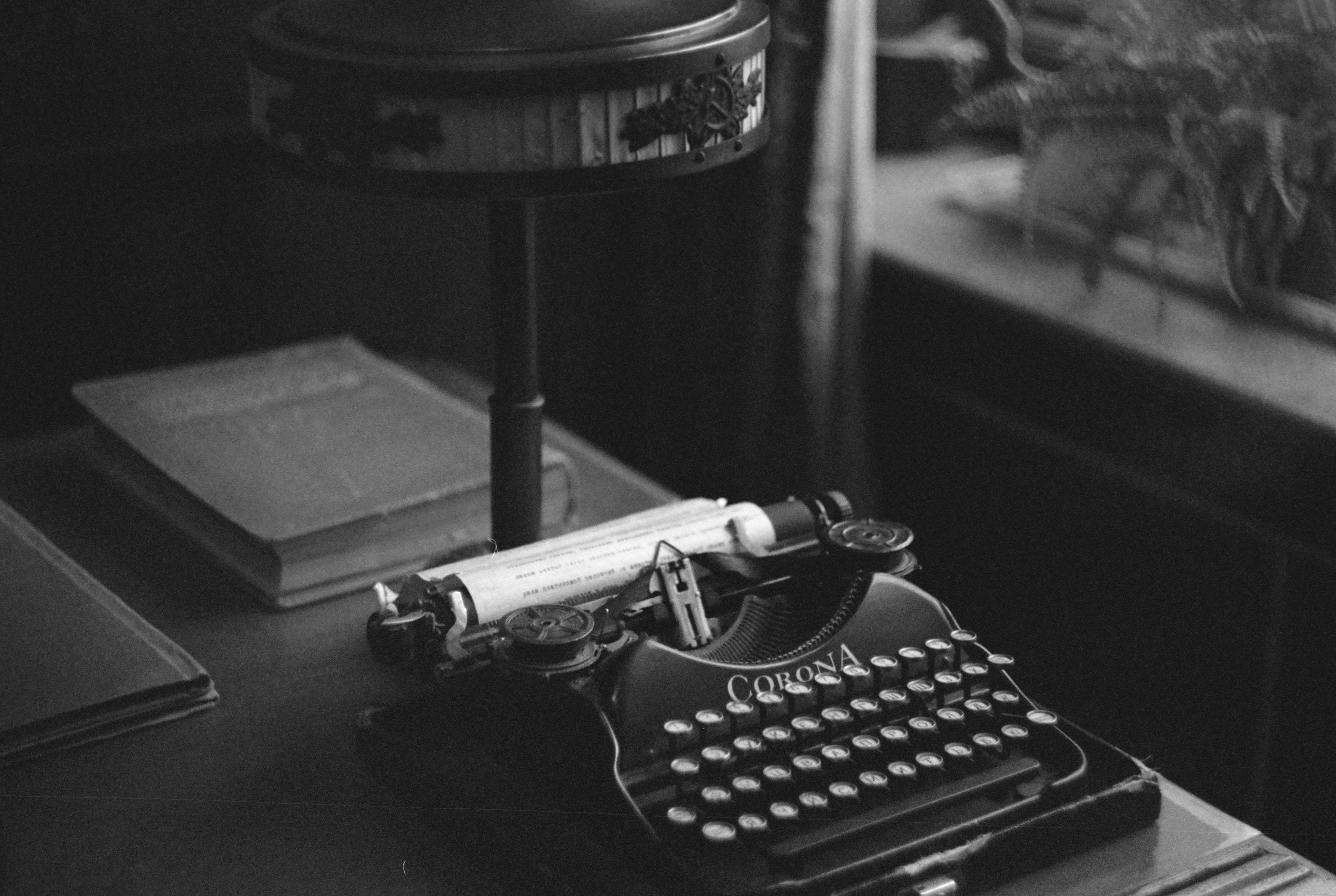
On the subject of writing, author Ta-Nehisi Coates says in an interview with the Atlantic: “Writing is an act of courage, it’s almost an act of physical courage… you sit down to write it[an idea] and almost always, what was brilliant before is somehow not so brilliant when you go to write… and so, you fail. And if you’re doing it correctly, the translation of what you hear in your head, what your idea is in your head, onto the page will almost always come out really badly when you first write. But what you have to do is give yourself a day, go back, revise over and over again until you get to something that is, at least, maybe 70% of what you wanted to do. You try to go from really bad to okay to acceptable… I’ve always considered the entire process about failure.”
Asked what his advice was to the young, aspiring writer, prolific Kenyan author and academic, Ngũgĩ wa Thiong’o had, for an answer, only a single, simple sentence: “write, write, write, and write again. And you’ll get it right.” Stephen King has often recounted his beginnings—how, for all the rejections he got, he pounded a nail on the wall and would hang them up. By the time he turned seventeen, the nail fell because of the many rejection slips he’d hung. So, he got a bigger nail. “If there’s any, any secret that I know to succeed,” he says, “it’s that, if you don’t succeed, get a bigger nail.”
What these three successful authors speak of—as have many other writers, movie stars, athletes, musicians, lawyers, doctors, taxi drivers, philosophers and academics—is the conventional idea of the process. The process of beginning from unknown territory, waking up everyday and honing the craft, again and again and again, without any guarantee of a creative breakthrough, just going at it, and failing, again and again until, at some point, something clicks and the days of practice finally count for something. Or sometimes, based on our goals, nothing comes of it. This guaranteed persistent failure, Coates believes, is why many people don’t write. “It’s depressing in that way,” he says. The antidote, he resolves, is perseverance. This is, of course, true for writing as it is with any other artistic endeavor, and life in general.
Much has been said about Artificial Intelligence(AI). Doom has been spelled on the musician, the writer, the lecturer, the graduate and, among many others, the junior developer. It has been said that AI has democratized content creation, of which, frankly, it has… but at what cost? Many AI creators have labelled AI as just another tool, a function for the human to enhance their day to day. However, I recall similar sentiments posed for the romanticization of social media’s utility functions. Those that reject this presentation of AI are, without nuanced discourse, reduced to mediocre luddites.
“They fear change,” it is said.
“Times are changing, embrace the new or sink!”
“Once they see the benefits, they’ll come around!”
Though I’m someone in the technology space myself, with a meagre software development experience to my name, I lack enough knowledge and expertise to diagnose the now and foretell what the future looks like. As a writer though, I’ve a huge contention: AI is robbing the writer, and creative, of that process—a necessary process from which, for the longest of time, great things have stemmed from.
Writer and research assistant to Ryan Holiday, Billy Oppeinhemer, shares a great question Alan Jacobs, humanities professor and author, has. “For this writer excited about how much of their writing they’ve been able to outsource to AI. For that one eager to outsource his research. For this woman who likes to watch movies at 2X speed. And for that one who loves how fast ChatGPT can summarize an entire book. ‘My question,’ Jacobs writes, ‘about all this is: And then? You rush through the writing, the researching, the watching, the listening, you’re done with it, you get it behind you—and what is in front of you? Well, death, for one thing. For the main thing. But in the more immediate future: you’re zipping through all these experiences in order to do what, exactly? Listen to another song at double-speed? Produce a bullet-point outline of another post that AI can finish for you? The whole attitude seems to be: Let me get through this thing I don’t especially enjoy so I can do another thing just like it, which I won’t enjoy either… I say: If you’re trying to get through your work as quickly as you can, then maybe you should see if you can find a different line of work. And if you’re trying to get through your leisure-time reading and watching and listening as quickly as you can, then you definitely do not understand the meaning of leisure and should do a thorough rethink.”
In consequence to AI’s removal of this friction—the process by which artists create profound art—AI slop mars our screens. Where one would sit with their art, revise, rinse and repeat, now, with a single prompt, an album of over twenty songs, a book of over twenty chapters, art resembling that of Picasso himself, can be created. To speak on the sheer amount of inauthenticity that AI creations have, particularly in the arts, is probably beyond the point. Just recently, Anthropic settled with authors in a lawsuit, with support from the Author’s Guild, for using copyrighted books to train its large language models. They settled for $1.5bn. Suno, a music AI company, was also sued for alleged copyright infringement by Universal though eventually striking a partnership. A plethora of similar cases are bound to soon follow; for the biggest contention that lies with AI creations is it being trained on real human effort and yet, no credit can be given to billions of such creators.
There’s a general dissatisfaction, a feeling of being fooled, when people come to fall in love with a musician only to find that their music was AI generated. Hence, upon encountering beautiful art, music, writing, and videos, the question: “Is it AI?”, is, of late, evoked. One would think quality justifies the means. It hasn’t been so! Many felt robbed after discovering that the viral Xania Monet and Sienna Rose, weren’t “real”. People would like to know if it’s AI or not? The hunger for such a distinction cannot be overlooked. Why? Well, and I’m guessing here, because we attach value to the process. But, I digress.
One thing we learnt from Big Tech’s failures with social media battling for monopoly of people’s attention without the user’s knowledge of the psychology involved behind such plots was that: laws that govern such advancements will always play catch up. Thus, as governments scramble to find their footing around this, or as the tech capitalists begin to rule the information age, I—the writer and AI consumer—am left to the liberty and mercy of self-regulation. It is in this breath that I lament the death of the process.
There’s something irking about the need for speed, the need to automate all, and to self-hack everything. This, I distaste. Not because it is an unfair advantage. No. Personally, to be tried and tested, going through the rejections, understanding that “progress is a magnitude of consistency” — that is the essence of creativity. “And interestingly,” says author Andy Crouch in a conversation with Jay Kim titled, Spiritual Formation and AI, “as AI has been rolled out by the various companies that have commercialized it, almost all of them are using some little iconography that represents like a little magical moment, like these little starbursts… or, sometimes, a literal wand to your writing and boom, without any effort, without you becoming a better writer it’ll just make your writing better. And we think: That sounds like the life I want. I want a life of minimal difficulty, maximal effect where I get to see things happen without myself having to be, kind of, deeply changed for them to happen.”
“I think writing should be hard,” says Coates, in another interview with Big Think. “...At the end of the day, the people I wanna read are people who would be socially dysfunctional if they weren’t writing. I wanna read people who need to write… People who’re halfway doing it should go work on wall street, or whatever…” These sentiments come across as a hard line, but I’ll have to concur with Ta-Nehisi here. Democratising access and lowering barriers of entry seems close to a utopia. Just as YouTube removed monopoly on content distribution, allowing individuals to create empires outside the need of mainstream networks, AI seems to promise the same, or so we believe. As a creative, I’m however afraid we’re breeding creatives that are halfway doing it.
Regardless of how shiny AI is, the process remains shinier, and necessary!
For March, this is The Pen and Pulse’s meditation.🫡
As always, thank you for reading this free publication.