

Smoke and Mirrors for a Birthday
‘How we talk to ourselves and the metrics by which we weigh our efforts are fundamentally important.’

Amavaka(cowards) is a song by BET award winning South African artist, Sjava, that speaks about self-doubt, where oftentimes, juxtaposing our present reality with our dreams, we feel as if everything is falling apart, we’re not where we wish to be, and, in adjudicating ourselves, we distaste our previous efforts, decisions, progress, and status quo. In the song he says:
Ngay’buka es’bukweni ngay’zonda
(I looked in the mirror and hated myself)Ngathi “uwena omosh’ impilo yami” ngaz’khomba
(I said “you are the one ruining my life” and pointed at myself)Ngizahlulela
(Judging myself)Ngidlisa inqondo yam u-poison
(Feeding my mind poison)Ngiy’tshela ukuthi ngiyahluleka
(Telling myself that I’m failing)Kanti I’m on the right track
(Whereas, I’m on the right track)
“The aim of the message,” he says in an interview, “ is for people to resist applying unnecessary pressure on themselves.” He gives the example of a traveler. Assuming they’re travelling to point C from A, and they’ve only just reached B, with arrival at C still unclear and uncertain. Lamenting the unknown distance of C without acknowledging the distance they’ve travelled would be akin to feeding themselves poison.
Canadian psychologist and author, Jordan Peterson, in his book, 12 Rules For Life, expounds it like this: “No matter how good you are at something, or how you rank your accomplishments, there is someone out there who makes you look incompetent…Inside us dwells a critical internal voice and spirit that knows all this.” Worse, because “we have become digitally connected to the entire seven billion,” “our hierarchies of accomplishment are now dizzyingly vertical.” As is evident in Sjava’s lyrics, this internal critic condemns our efforts and is prone to make one doubt the value of their endeavors.
When we were young, it was necessary that we compared ourselves to others. Youths are neither individual nor informed. Not enough time has passed to accrue wisdom for the development of standards. And without standards, there is nothing to aim at; there is practically nowhere to go and nothing to do. “As we mature,” writes Peterson, “we become, by contrast, increasingly individual and unique. The conditions of our lives become more and more personal and less and less comparable with those of others.” Therefore, once we’re adults, we’ve become singular beings with our own “particular, specific problems—financial, intimate, psychological, and otherwise.” In this context, comparing ourselves to others must come with caution, or effectively, not at all.
On why people feel poorer, less productive, and generally worse off than they really are, writer Billy Oppeinheimer, in his weekly newsletter, quotes Dr. Laurie Santos(professor of psychology and cognitive science at Yale University and a leading researcher on happiness and fulfillment) who says: “The problem is that one of the ways we evaluate pretty much every situation is that we don’t do it objectively, we do it relatively.” We evaluate our financial status, productivity levels, relationships, intelligence with even richer, more productive, more seemingly romantic, and more intelligent people. “This is just a fundamental way we evaluate stuff in life,” Dr. Santos continues. “We don’t do it in objective terms. We do it relative to those around us. And that can have a huge hit on people’s perception of their happiness levels, their stress levels, and their overall satisfaction with their lives.” Here, Peterson goes on to say: “We live within a framework that defines the present as eternally lacking and the future as eternally better.”
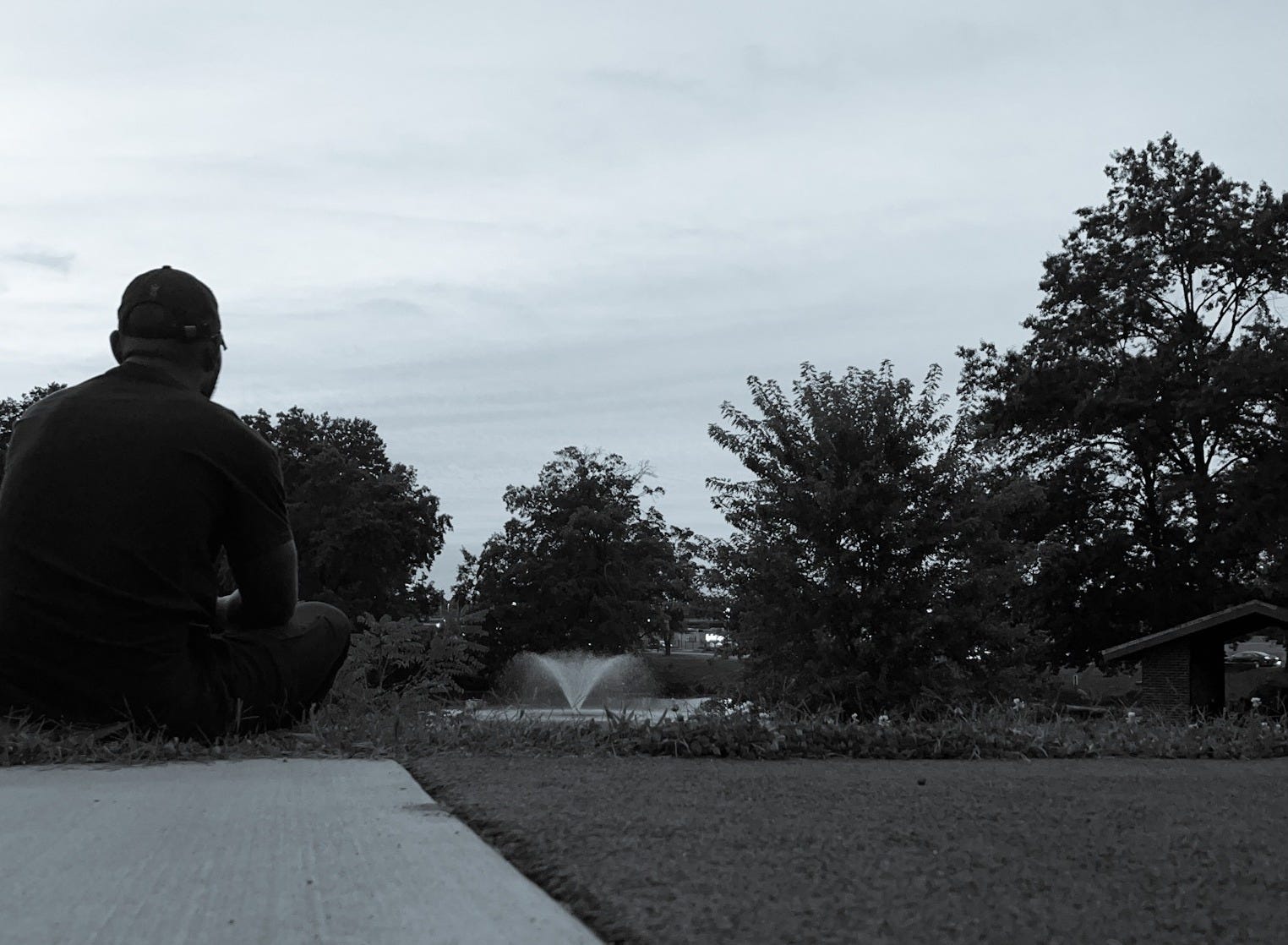
Making the album, Isibuko(mirror), where the song Amavaka is found, Sjava says the songs were mainly dedicated to him; “It was more of like, I’m talking to myself,” he says. Amavaka’s meditative lofi beat encapsulates the reflective mode he was in during the song’s creation. For me, celebrating—or, rather—turning 28 years brought with it the ever so loud internal critic, relentlessly questioning and presenting its noisy case. On Grounding, another song on the album, in a heartfelt conversation between Sjava and his mother, his mother expresses concern that he hasn’t married and hasn’t started a family yet. She notes that his “sun is setting” yet he still has no children. On track 8, My life, Sjava presents a firm warning not to envy the glitter and gold we see on the “Gram” because what’s mooi van ver is often ver van mooi—an Afrikaans idiom that translates to, “beautiful from afar, but far from beautiful.” Okay, this is not a Sjava review or masterclass; I digress. The point, however, is: oftentimes, life ushers us to such moments of introspection. How we talk to ourselves and the metrics by which we weigh our efforts are fundamentally important.
What is important is moving forward, Sjava further reflects. The pace—usually because it doesn’t often happen at our desired pace—is not so much a problem as is how we adjudicate our progress relative to our past and present selves. Because, untrained, our internal voice is mere smoke and mirrors, obscuring the true essence of our being.
And, because we perceive and experience the world in our own idiosyncratic manner, as far as comparison is concerned, we settle at Peterson’s 4th Rule:
Compare yourself to who you were yesterday, not to who someone else is today.
For February, this is The Pen and Pulse’s meditation.🫡
As always, thank you for reading this free publication.
Aluta Continua, beautifully so.
I will have to find this song and listen to it. Comparison kills the spirit.
This is a word in season. I had to listen to the song for the first time whilst reading this. Happy birthday, may the Spirit of God guide you in your journey. I am rooting for you, Phiwe!